
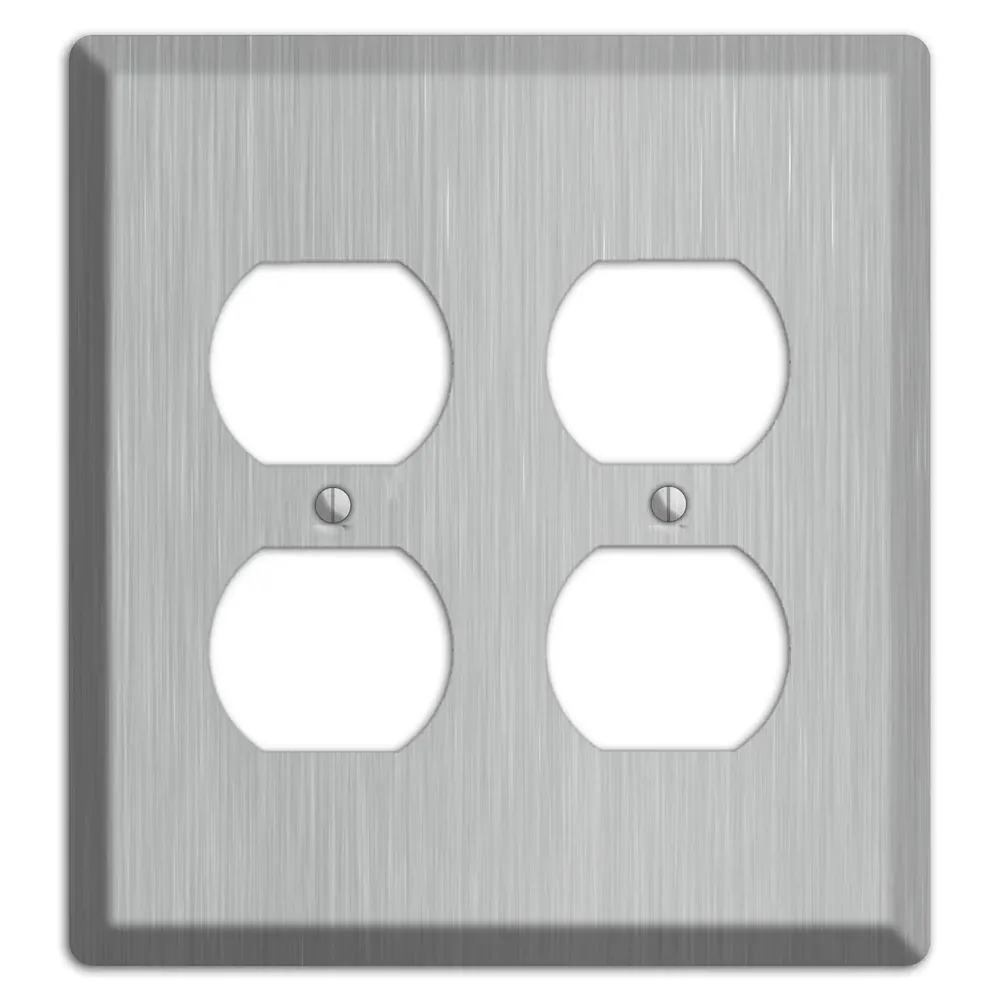
There's a particular silence that falls when a breaker trips mid-shoot. The modeling lights die, the recycle whine stops, the client looks up, and you walk off to find the panel while everyone waits. It's the most avoidable interruption on a set, and it comes down to a piece of infrastructure nobody photographs: the electrical service. At photospace, the shooting floor runs on eight dedicated 20-amp circuits, fed through aluminum wall plates on either side of the cyclorama — and that's a spec worth understanding.
Power is one of those things you only notice when there isn't enough. A normal room gives you a couple of household outlets sharing one breaker with the lights and the HVAC. A studio is built to feed lights that draw real current, all at once, without a flicker. Here's what that means.
What amperage means for big lights
Every light you plug in draws current, measured in amps. A circuit can only carry so much before its breaker trips to protect the wiring — that's its rating. Pull more than the circuit is rated for, and it shuts off. The math that matters is simple: watts divided by volts gives you amps. On a standard 120-volt outlet, a 20-amp circuit can safely deliver roughly 1,920 watts before it's maxed (and code keeps a continuous load under about 80% of that for headroom).
Professional lights eat into that budget fast:
- Strobe packs spike hard. A big pack doesn't sip — it pulls a burst of current to recharge between pops, and its modeling lamps draw continuously on top of that. Several packs on one circuit will trip it the moment they all recycle together.
- Continuous LED runs steadily. A large panel or fixture draws its rated wattage the whole time it's on — no spikes, but a constant, real load that adds up across a multi-light setup.
- Everything else — the tether station, monitors, fans, chargers, a coffee maker in the kitchen — all quietly draws from the same supply.
Why eight dedicated circuits change the math
"Dedicated" is the key word. These eight 20-amp circuits aren't shared with the building's lights, the HVAC, or the kitchen — they're there for your gear and nothing else. Eight separate circuits means eight separate budgets to spread your load across, so no single wire ever carries the whole shoot.
In practice, that means you can run, simultaneously and without a thought:
- A multi-head strobe setup — key, fill, and background lights with their modeling lamps on — distributed across several circuits so the recycle surges never stack up on one breaker.
- Continuous LED for video or as a constant key, drawing its steady load on its own circuit.
- The calibrated tether station, monitors, and a second display for art directors, on power that won't dip when a strobe recycles.
- All the incidentals — fans, chargers, the kitchen — without borrowing from your lighting budget.
Spreading high-draw lights across separate circuits is also just cleaner power. When a big strobe recycles on a shared line, it can cause a brief voltage sag that makes other lights flicker. Give each heavy load its own circuit and that cross-talk goes away — steady, predictable power for everything plugged in.
Where the power lives: both sides of the cyc
Location matters as much as capacity. The outlets are mounted in aluminum wall plates on either side of the cyclorama — which is exactly where your lights want to be. Lighting a cyc evenly means sources coming from both sides of the cove, and you want to plug each one into a nearby outlet, not run a snake of extension cords across the floor where talent and carts move.
Power on both sides keeps cable runs short and the floor clear. Short runs mean fewer trip hazards, less cable to dress and tape, and no voltage drop from feeding a high-draw strobe through a hundred feet of undersized extension cord. The aluminum plates are the rugged, permanent kind built for a working studio, not the brittle plastic of a household outlet that cracks the first time a C-stand leg catches it.
When the power matters most
You'll be glad of the circuits when:
- You're running a full lighting package — multiple strobe heads, modeling lamps, and continuous fixtures live at the same time.
- You're mixing strobe and continuous — the two draw very differently, and you want them isolated so a recycle never dips your video key.
- Tether reliability is critical — a power dip that drops your capture mid-frame on a client shoot is exactly what dedicated circuits prevent.
- The shoot is big — automotive, large sets, or anything that needs serious wattage to fill the space and light the cyc.
- Downtime is expensive — a tripped breaker in front of a paying client costs more than time; dedicated power is cheap insurance against it.
Whether you bring your own lights or add a strobe or continuous LED package from the on-site gear house, the power is already there to feed all of it — no daisy-chained outlets, no surprise blackouts, no walking to the panel while the client waits.