
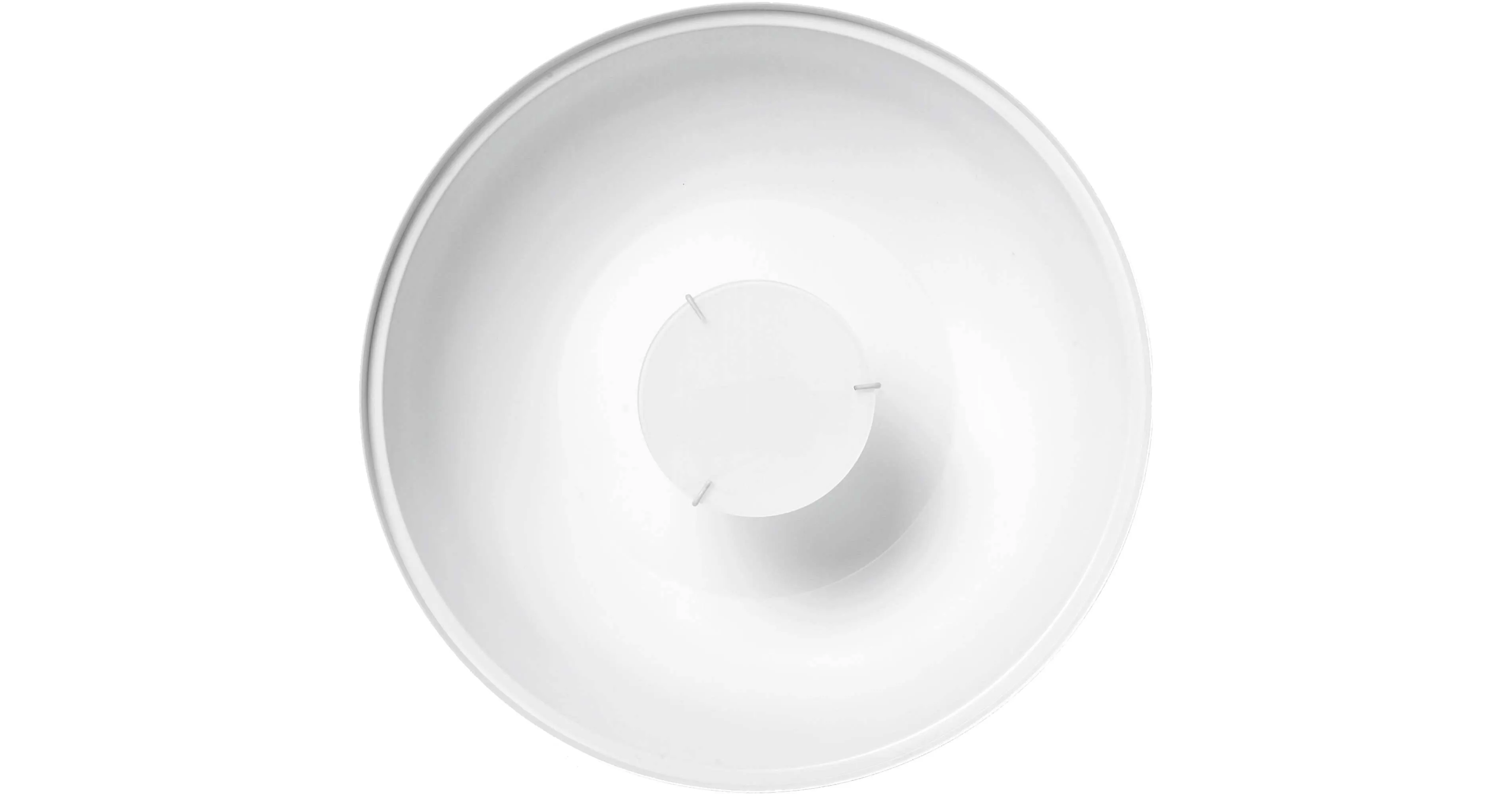
Ask a portrait photographer what makes a face look expensive and they'll usually point at one tool: the beauty dish. It's a shallow, dished reflector — wider and more open than a hard reflector, but nowhere near as soft as a box — with a small disc suspended in the center that blocks the bare flash tube and bounces its light back into the dish first. The result is a quality of light that sits right in the sweet spot: soft enough to flatter, crisp enough to sculpt. Cheekbones, jawlines, and collarbones all read with definition, and skin keeps a healthy snap that a big softbox can sand away.
What it is and what it does to light
A softbox throws diffuse, low-contrast light that wraps generously around a subject. A bare reflector throws hard, high-contrast light with dense shadows. A beauty dish lives between them. Because the central disc forces the light to bounce around the dish before it leaves, you lose the harsh point-source quality of the bare tube — but the dish is shallow and undiffused, so the light stays directional and contrasty. You get a soft-edged shadow with a fairly quick falloff, a bright specular highlight on skin, and gentle, even coverage across the face. Photographers describe it as 'soft light with teeth.'
The classic placement makes the look: the dish goes high and close, angled down at maybe 45 degrees, so a small, soft shadow forms under the nose and chin. That's the 'beauty' position, and it's why the modifier carries the name.
White vs silver — two different attitudes
We rent the dish in white and silver, and the interior coating genuinely changes the look:
- Silver dish — more specular, punchier, higher-contrast. It throws a brighter, harder-edged highlight and crisper shadow transitions. This is the editorial, fashion, and beauty-cosmetics look: defined, glossy, a little dramatic. It's also slightly more efficient, so you get a touch more output.
- White dish — softer, smoother, lower in contrast. The matte interior scatters the light more, so the falloff is gentler and the highlights are calmer. Reach for white on natural beauty, headshots, and any skin you want to render kindly without losing shape.
A quick rule: if you want the light to flatter, start white; if you want it to sculpt, start silver. Many shooters keep both on the shelf and pick per subject.
Best subjects and use cases
The beauty dish earns its keep anywhere the face is the product:
- Beauty and cosmetics — the crisp specular highlight makes skin, makeup, and product finishes read with definition.
- Fashion and editorial — directional contrast adds drama and shape that a soft key flattens.
- Headshots with character — corporate and actor headshots that want a little more sculpt than a plain softbox gives.
- Defined musculature and physique — the contrast that flatters cheekbones also flatters shoulders, arms, and abs for fitness and dance.
Where it's the wrong tool: very textured or aging skin that you want to keep gentle (a softbox or octa is kinder), or fast-moving group shots where a wider, more forgiving source covers more bodies.
In the studio and on the cyc
A beauty dish is a single-subject tool, which makes it a natural fit for the studio. The dish wants to live high and close, and a controlled room lets you commit to that placement without fighting the sun. A typical build: the dish as a high key, a white V-flat or reflector low and in front to lift the under-eye and jaw shadow, and a second strobe with a grid for separation. Because everything is on stands and metered, you can shoot a full beauty story and have frame 200 match frame 1.
Setup and control: grid and sock
The dish is a starting point. Two small accessories let you tune it:
- Grid for the dish — a honeycomb that snaps over the front and tightens the beam into a controlled pool of light. Use it to feather light onto the face while keeping it off the background, or to build a tighter, more dramatic falloff. It costs you some output, so plan a little extra power.
- Diffusion sock — a stretchy white scrim that pulls over the front of the dish and turns it into a much softer source — closer to a small, round softbox while keeping the dish's even, on-axis character. Add the sock when the bare dish is too crisp for the skin in front of you, or when you want the round catchlight without the contrast.
Distance is your other big dial. Bring the dish in close and the light gets softer and falls off faster — flattering and moody. Pull it back and it gets harder and more even, but covers more of the subject. Most beauty looks live within a few feet of the face. If you'd rather not carry the full rigid dish, the OCF Collapsible Beauty Dish folds down like an umbrella and gives a very similar look in a fraction of the bag space — handy when you're adding it to a strobe kit for location work.
When to rent it
A beauty dish is an inexpensive, high-impact modifier — but renting still makes sense when:
- You want to compare white and silver on a real subject before deciding which to buy.
- The look is occasional — you shoot beauty or fashion now and then, not every week.
- You're traveling light and want the collapsible version for a location portrait day.
- You're already renting the room — add the dish, a grid, and a sock to the studio booking and walk in ready.
We rent the Profoto Beauty Dish in white and silver, the OCF Collapsible Beauty Dish (white/silver) for travel, a grid to tighten the beam, and a diffusion sock to soften it — mount any of them on a Profoto head from the strobe wall.