
Every shoot runs on electricity, and the fastest way to stall one is to forget it. You're three setups deep, the client is watching the monitor, you flip on one more light — and the room goes dark because you just asked one wall circuit to do the work of three. Power isn't the glamorous part of a production, but a five-minute plan for how the juice gets from the wall to the fixtures is what keeps the day moving and everyone safe. Here's the practical, first-principles version of set electrical: what the cable is, how much current you actually have, and when a wall outlet won't cut it.
What set power actually is
Strip away the jargon and a set's power system is three things: a source (wall outlets, or a generator), distribution (the cable and strips that fan that power out to where the lights are), and the loads (your lights and gear pulling current). Knowing the vocabulary makes the rest easy:
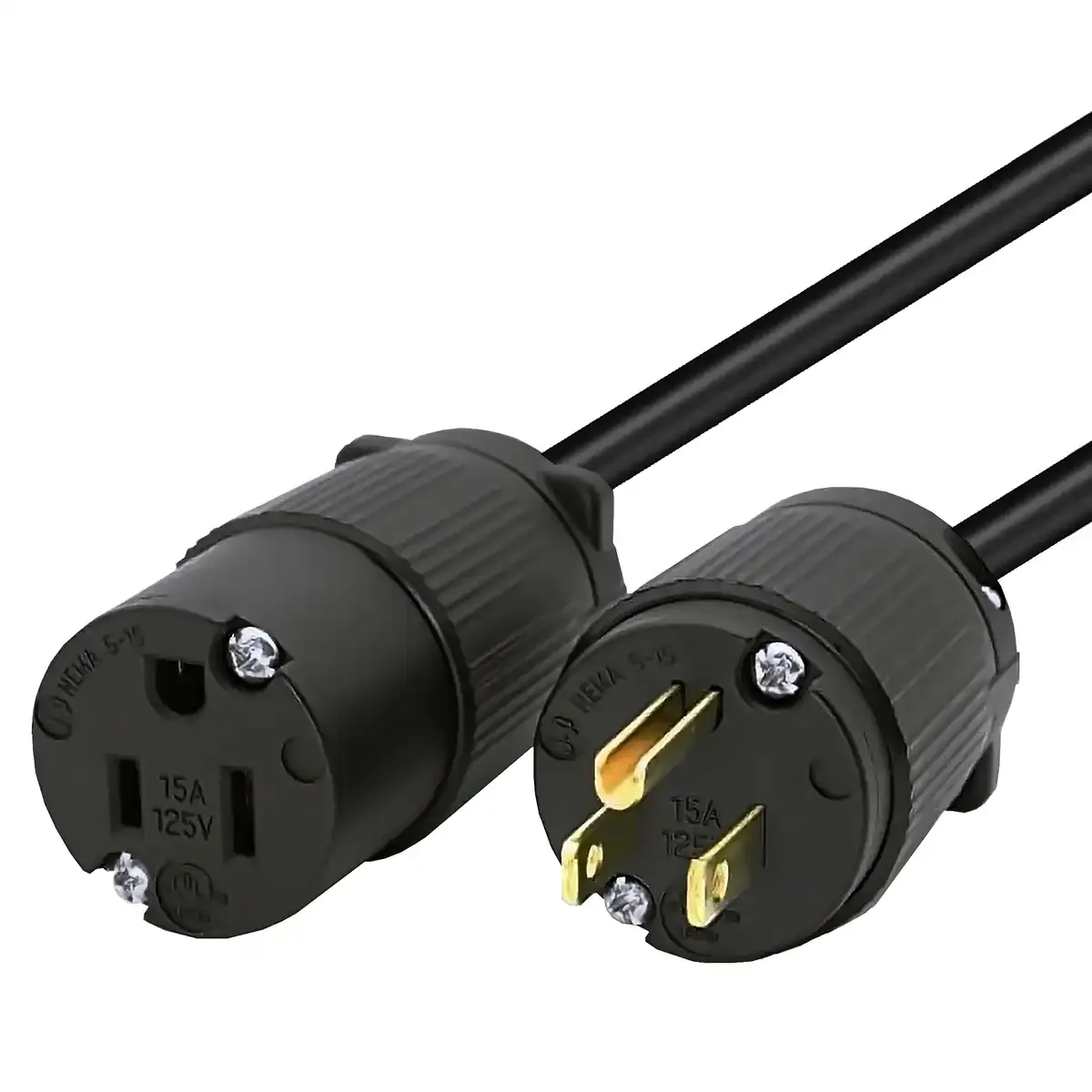
- Stinger — set slang for a heavy-duty extension cord. It carries power from an outlet to a fixture across the room. They come in 25', 50', and 100' lengths so you can reach without daisy-chaining a dozen short cords.
- Power strip / distro — a strip or block that splits one outlet into several, so a cluster of lights can share a run. Basic on-set 'distribution.'
- Circuit — the wiring behind a single breaker. Everything plugged into outlets on that circuit shares one current budget. Trip the breaker and everything on it dies at once.
- UPS — an uninterruptible power supply: a battery-backed strip that keeps critical gear (a tether station, a router, a monitor) alive through a brief outage or a swap, so you don't lose work the instant power blips.
The one piece of math that prevents most problems
You don't need to be an electrician, but you do need this: watts ÷ volts = amps, and every circuit has an amp limit. In North America, standard outlets run at about 120 volts, and a typical household circuit is rated 15 amps (a beefier dedicated one is 20 amps). A 15-amp circuit can therefore carry roughly 1,800 watts in theory — but the safe working rule is to load it to about 80%, so plan for ~1,400 watts on a 15-amp circuit and ~1,900 on a 20-amp. Continuous draw at the very top of a breaker's rating is what makes it trip (or worse, overheat).
So before you plug in, add up the wattages of everything you're putting on a single run. Three 300-watt LED panels and a couple of chargers on one 15-amp circuit? Comfortable. Pile a hair dryer, a space heater, two strobe packs recycling at full power, and the coffee maker onto the same kitchen circuit? That's a dark room and a reset breaker hunt. Spread big loads across different circuits — and in an unfamiliar building, find out which outlets are on which breaker *before* you're depending on them.
Powering a set safely
Plan the cable runs before you light
Decide where the lights go, then figure out the shortest, safest path from outlets to each fixture. Use the right stinger length so you're not coiling 80 feet of slack under a stand or, worse, stringing three short cords end to end. Pull runs along walls and out of traffic lanes where you can. A clean power plan laid down first means you're not re-routing cable mid-shoot with talent standing by.
Tape, ramp, or route every cable people cross
A stinger lying across a walkway is the most common set injury waiting to happen — a tripped crew member, a yanked light, a dropped modifier. Any cable crossing a path where people walk gets taped down (gaff tape over the cord), run along the wall edge, or covered with a cable ramp. Coil and hang the slack rather than leaving loops on the floor. It's the simplest safety habit on set and it protects both people and gear.
Spread the load and respect the breaker
Don't fight a circuit — feed it within its budget and move extra load elsewhere. If you're running a lot of fixtures, pull stingers from several different outlets/circuits rather than chaining strips off one. Avoid stacking power strip into power strip into power strip ('daisy-chaining' distro), which both overloads a single circuit and adds failure points. And never defeat a breaker or a ground pin to make something fit — the breaker tripping is the system working. Put a UPS on anything you can't afford to lose to a blip — the tether computer above all.
Keep generators outside and grounded
On locations with no usable power, a portable generator is the source — but it comes with hard safety rules. Run a generator outdoors only, never inside or in an enclosed space, and keep its exhaust well away from doors, windows, and the crew: gas engines produce carbon monoxide, which is invisible, odorless, and deadly. Set it on stable ground, keep fuel away from heat, and let it cool before refueling. Size it honestly — a 2,000-watt unit comfortably runs a modest LED package or a charging station, but the same 80% headroom and amperage math apply: don't expect a small generator to feed a full strobe build.
The studio advantage: power you don't have to think about
Most of these headaches exist because ordinary rooms were never wired for production. A purpose-built studio is. At photospace, the shooting floor has eight dedicated 20-amp circuits, which means you can run strobe packs, a full continuous-LED package, and a tether station all at once without playing breaker roulette or hunting for the one outlet that won't pop. That's the quiet luxury of shooting in a controlled room: you plug in and light, instead of mapping a stranger's electrical panel. You'll still want stingers to reach across the floor and strips to fan out a cluster of fixtures — but the circuits underneath are built for the load, so the math is working in your favor before you start.
When to rent it
Cable, distro, and especially generators are bulky, occasional-use gear that's far easier to rent than to own and maintain. Renting makes sense when:
- You're shooting on location — a job with no reliable power needs a generator and plenty of stinger to reach the set, neither worth owning for a one-off.
- The build is power-hungry — multiple fixtures across a big space eat more cord and distribution than a personal kit carries.
- You need clean, protected power — a UPS on the tether and critical gear is cheap insurance against a lost session.
- You're already renting the room — add stingers and strips to the studio booking and plug straight into the dedicated circuits.
Our grip and electrical rental inventory has stingers (25', 50', 100') at $3, power strips at $3, a UPS at $10, and a Honda 2,000-watt generator at $100 for location days, with gaff tape and the rest on the production supply shelf. Take enough cord to reach without daisy-chaining, a UPS for anything you can't afford to lose, and a generator only when there's truly no wall power to be found.