
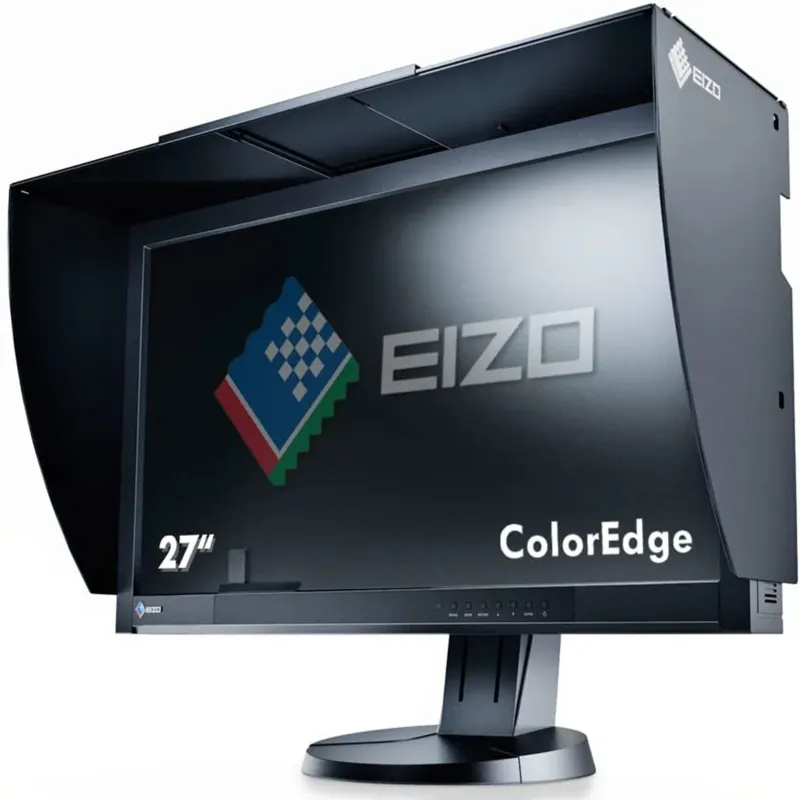
Most cameras give you a flip-out screen a few inches across, and on a video set that screen quietly lies to you. It's too small and too dim to confirm critical focus, awkward to share with anyone standing behind the camera, and easy to misjudge a frame on. An external on-camera monitor fixes all of that at once — it's a bigger, brighter, sharper view of exactly what the sensor sees. The SmallHD AC-7 is the on-set monitor we hand to crews who are tired of squinting at the back of the camera and guessing.
What the AC-7 is
The SmallHD AC-7 is a 7-inch on-camera field monitor — a dedicated display that mounts to your rig and shows a live feed from the camera over a video cable. SmallHD lists it as part of their legacy monitor line, so it's an older, road-proven model rather than a current release; we keep the spec claims general and let the working role speak for itself.
SmallHD AC-7 — at a glance
- Type
- On-camera field monitor
- Screen
- 7-inch — far larger than a camera's rear screen
- Inputs
- HDMI and SDI camera feeds
- Mounting
- Rigs to the camera or a stand for a viewing station
- Use
- Critical focus, framing, and client viewing on set
An on-camera monitor is one of those tools whose value is obvious the first time you use one and hard to give up afterward. It changes a video shoot from *hoping* the frame is right to *knowing* it is — for you, and for everyone else on set who needs to see it.
Why an on-set monitor matters
Focus you can actually confirm
The single biggest reason to run a monitor is critical focus. On a small, low-resolution rear screen, a slightly soft shot looks identical to a sharp one — and you don't discover the difference until you're reviewing footage at full size, long after the talent has gone home. A larger, sharper monitor lets you see exactly where the focus falls, hold an eye sharp in an interview, and catch a soft frame while you can still re-roll. On video, where you can't simply pick the one sharp frame out of a burst, that confidence is everything.
Framing and composition, seen properly
Composition decisions get easier on a bigger canvas. A stray light stand creeping into the corner, a crooked horizon, headroom that's a touch off, a reflection in the product — these are simple to spot on a 7-inch monitor and simple to miss on a thumbnail-sized screen. Seeing the whole frame clearly means you fix problems on set instead of in the edit, where some of them can't be fixed at all.
A screen the client can stand behind
On a commercial shoot, the people paying for the work want to see it happening. Nobody can do that hunched over the back of a camera — but a monitor turns the shot into something a client, art director, or subject can watch in real time. That changes the dynamic completely: notes happen live, approvals happen on the spot, and there are no surprises at delivery because everyone already saw and signed off on the take in the room.
How it complements the studio tether station
Think of the monitor and the tether as two halves of the same idea: get the image off the tiny camera screen and onto something everyone can trust. For stills, our studio tether station puts every frame on a large display the instant you shoot it. The AC-7 does the equivalent job for motion — a live, full-resolution view of video as it's being captured, riding on the camera or mounted at a station for the room to watch.
On a hybrid day that mixes a campaign still and a short video, the two work side by side: the photographer pulls stills to the tethered station for the art director to approve, while the video operator frames and focuses on the on-camera monitor. Both teams are looking at a real image instead of guessing, which is the entire point of a controlled, monitored set.
When to rent it
A monitor is shoot-day gear — invaluable while you're rolling, idle the rest of the time — which makes it a natural rental. Renting wins when:
- You're shooting video — anything where critical focus and framing carry the deliverable.
- A client is on set — give the people paying for the work a screen they can actually watch.
- You build a cinema rig occasionally — a monitor and matte box a few times a year doesn't justify owning them.
- You're already booking the room — add the monitor to a studio video day and run a proper viewing station.
We rent the SmallHD AC-7, with the Wooden Camera Matte Box and Donut available to round out a built video rig. Both sit on the same accessory shelf as the gimbals, cages, and grip that complete a motion build.